If you’ve spent any time exploring anti-aging skincare, you’ve likely come across retinol. It’s one of the most talked-about ingredients for fine lines, uneven skin tone, and skin texture.
But what about retinoids? Are they the same thing? Is retinal stronger than retinol? And do you really need a prescription product to see results?
Understanding these differences can help you choose products that suit your skin instead of simply reaching for the highest concentration.

What Are Retinoids?
Retinoids are a family of compounds derived from vitamin A. They’ve been used in dermatology for decades, particularly for acne and visible signs of skin aging.
Certain retinoids help regulate skin cell renewal and support collagen production, making them useful for addressing several common skin concerns:
- 细纹和皱纹
- Uneven skin texture
- Sun-related pigmentation
- Acne and clogged pores
- Dull-looking skin
Here’s the important distinction: retinol is a type of retinoid, but not all retinoids are retinol.
The retinoid family includes retinol, retinal, tretinoin, adapalene, and several other compounds. They differ in chemical structure, potency, intended use, and irritation potential.

Retinol, Retinal and Tretinoin: How Are They Different?
One of the biggest differences between these ingredients is how they become active within the skin.
Retinol
Retinol is commonly found in over-the-counter skincare products.
Once applied, it undergoes two conversion steps before becoming retinoic acid, the biologically active form of vitamin A.
With consistent use, retinol can help improve the appearance of fine lines, uneven skin tone, and rough texture.
It’s a popular option for people who want to introduce vitamin A into their skincare routine without starting with a prescription treatment. However, retinol can still cause dryness, redness, and peeling, particularly when first introduced.
Retinal
Retinal, also called retinaldehyde, requires only one conversion step to become retinoic acid. This makes it a closer precursor to the active form than retinol.
However, fewer conversion steps don’t automatically make every retinal product stronger or more effective than every retinol product. The formulation, concentration, stability, and your skin’s tolerance all influence results.
Tretinoin
Tretinoin is a prescription retinoid that is already in the active retinoic acid form. It has extensive clinical evidence supporting its use in acne and photoaging.
Because it acts directly on retinoid receptors, tretinoin can produce more pronounced effects, but it can also cause considerable dryness and irritation. It should be used under the guidance of a healthcare professional.
Retinol vs. Retinal vs. Tretinoin
| Feature | Retinol | Retinal | Tretinoin |
|---|---|---|---|
| Vitamin A derivative | Yes | Yes | Yes |
| Conversion to retinoic acid | Two steps | One step | Already active |
| Typical availability | Over the counter | Over the counter | Prescription |
| Common concerns | Aging, texture, uneven tone | Aging, texture | Acne, photoaging |
| Irritation potential | Varies | Varies | Often higher |
The most effective option isn’t necessarily the strongest. A product that you can use consistently without excessive irritation may be more suitable for your skin.

What Does Retinol Do for Your Skin?
Retinol offers several potential benefits, particularly when used consistently as part of a well-designed skincare routine.
1. Improves the Appearance of Fine Lines
As we age, our skin naturally produces less collagen. Years of sun exposure can also contribute to collagen breakdown and visible wrinkles.
Retinoids can support collagen production and improve the appearance of fine lines associated with photoaging.
Changes develop gradually, usually over several months rather than days.
2. Refines Skin Texture
Retinol influences skin cell renewal, helping improve the appearance of rough, uneven skin.
Over time, skin may look smoother and more refined.
3. Helps With Uneven Skin Tone
Retinol can help address certain forms of discoloration, including uneven pigmentation associated with sun exposure.
For those particularly concerned about dark spots or dullness, formulations combining retinol with complementary brightening ingredients may be worth considering.
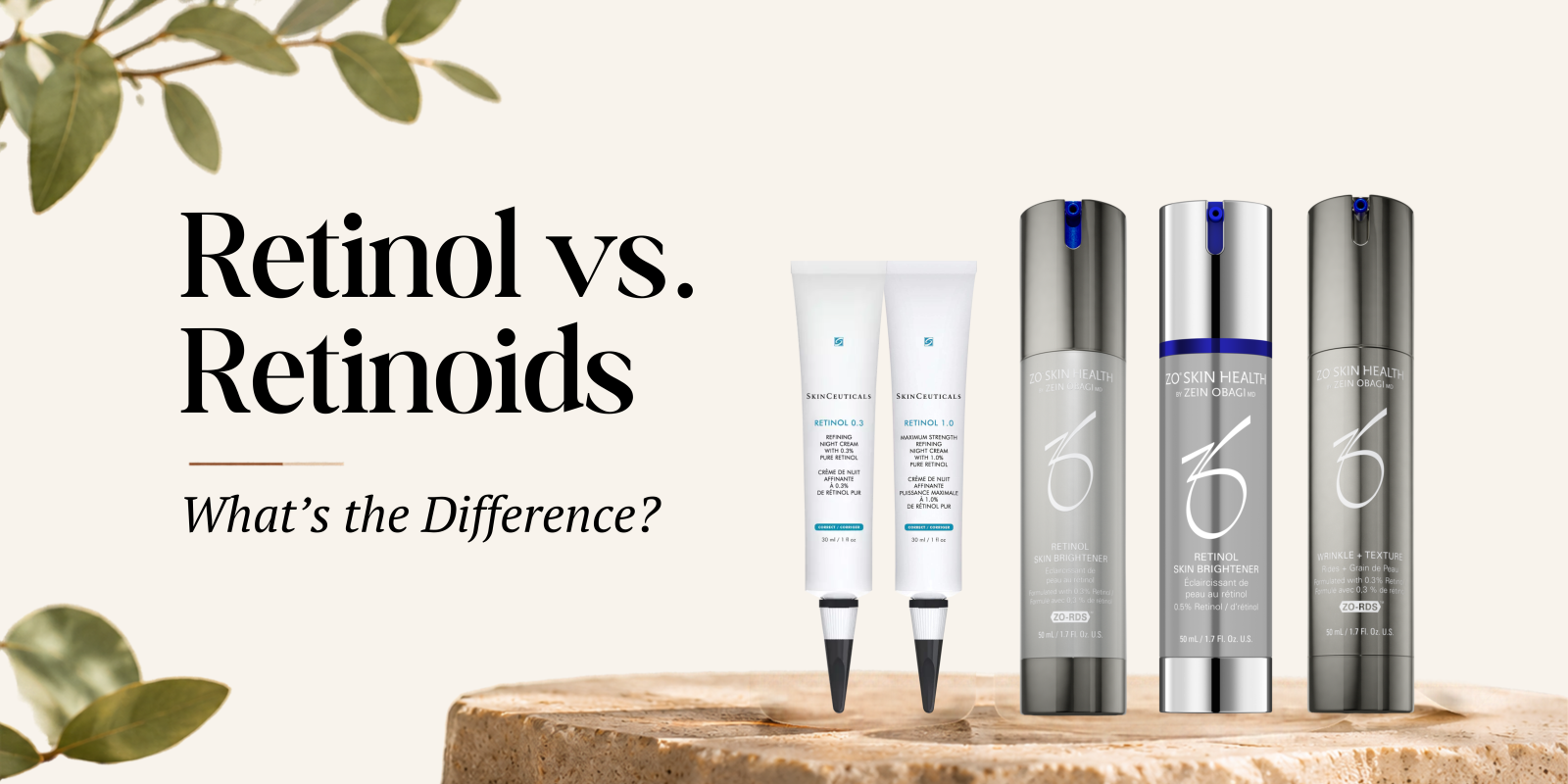
For example, ZO Retinol Skin Brightener 0.25% combines retinol with ingredients including ascorbic acid and antioxidants to help improve the appearance of uneven skin tone.
However, pigmentation concerns such as melasma may require a different approach, and daily sun protection remains essential.
4. Supports Acne-Prone Skin
Certain retinoids are established treatments for acne because they help prevent clogged pores.
However, prescription retinoids and adapalene have stronger evidence for treating acne than cosmetic retinol products.
If you’re experiencing persistent breakouts or acne scarring, a professional skin assessment can help identify appropriate options.

How to Choose the Right Retinol Strength
One of the most common mistakes with retinol is assuming that a higher percentage will always deliver better results.
In reality, retinol concentration is only one consideration. Your skin’s tolerance, the product’s formulation, and your experience with vitamin A matter just as much.
Starting With Retinol: Lower Concentrations
If you’re new to retinol, a lower-concentration product may be a reasonable starting point.
SkinCeuticals Retinol 0.3% contains 0.3% pure retinol and bisabolol, an ingredient included to help soothe the skin. It’s formulated to address the appearance of fine lines, uneven texture, and discoloration.

Another option is ZO Retinol Skin Brightener 0.25%, which focuses on uneven skin tone and visible discoloration.

These lower strengths may be appropriate starting options for selected users, although even low-concentration retinol can cause irritation.
Moving Up to Retinol 0.5%
Once your skin has adjusted to retinol and you are using it consistently without significant irritation, you may consider a higher concentration.
SkinCeuticals 视黄醇 0.5% is designed for skin that has already been conditioned with a lower-strength retinol.
Its formulation includes pure retinol and bisabolol to support skin renewal while helping manage irritation.
There is no fixed timeline for increasing strength. Some people benefit from staying with a lower concentration long term.
When Is Retinol 1% Appropriate?
Higher-strength retinol products are generally better suited to people who already tolerate retinol well.
SkinCeuticals Retinol 1% contains 1% pure retinol and is intended for skin previously conditioned with lower concentrations.
It targets visible signs of photoaging, including fine lines, discoloration, and uneven texture.
A 1% formulation isn’t necessarily the right choice for everyone, and it shouldn’t be treated as the ultimate goal of every skincare routine.

Not sure where to start? A professional consultation can help you select a suitable formulation based on your skin condition, previous product use, and treatment goals.
How to Introduce Retinol Into Your Routine
Getting started with retinol doesn’t need to be complicated. A gradual approach is usually best.
Step 1: Start With Two Nights a Week
Apply retinol on two nonconsecutive evenings per week to begin with, unless your product instructions or clinician recommend otherwise.
If your skin tolerates it well, gradually increase the frequency.
Step 2: Apply to Clean, Dry Skin
Retinol is generally used in the evening.
After cleansing, allow your skin to dry and apply the recommended amount, avoiding sensitive areas such as the eyelids unless the product is specifically formulated for them.
Step 3: Support Your Skin Barrier
Dryness is a common concern when introducing retinol.
A moisturizer containing ceramides, glycerin, or other barrier-supporting ingredients can help keep your skin comfortable.
SkinCeuticals 2:4:2 Triple Lipid Restore is one moisturizing option available through Vancouver Laser’s skincare collection.
Step 4: Use Sunscreen Every Morning
Sunscreen is essential for managing pigmentation and preventing further signs of photoaging.
Choose a broad-spectrum sunscreen with SPF 30 or higher and apply it as directed.
For example, ZO Sheer Fluid Broad-Spectrum Sunscreen SPF 50 is one of the sun protection options carried by Vancouver Laser.
The goal is to make sunscreen part of your everyday routine, whether or not you’re using retinol.

Can You Use Retinol With Vitamin C, Niacinamide or Hyaluronic Acid?
Retinol can work alongside other skincare ingredients, but a thoughtful routine helps minimize irritation.
Retinol and Vitamin C
Both ingredients can help address visible signs of photoaging. Many people choose vitamin C in the morning and retinol in the evening to simplify their routines.
Retinol and Niacinamide
Niacinamide can help support the skin barrier and improve the appearance of uneven tone. It is generally compatible with retinol.
Retinol and Hyaluronic Acid
Hyaluronic acid helps retain moisture, making it a useful ingredient for skin experiencing dryness during retinol use.
Retinol and Exfoliating Acids
Combining retinol with AHAs or BHAs can increase irritation, especially for beginners. Consider using these ingredients on separate nights when appropriate.
Introducing too many active products at once can make it difficult to identify what is causing irritation.
How Long Does Retinol Take to Work?
Retinol isn’t an overnight treatment.
Changes in skin texture may become noticeable after several weeks, while improvements in fine lines and discoloration often require several months of consistent use.
Results vary depending on the product, concentration, frequency of application, and individual skin characteristics.
If your skin becomes persistently irritated, increasing the concentration is unlikely to solve the problem. Reducing frequency or seeking professional advice may be more appropriate.
Who Should Avoid Retinol?
Retinol isn’t suitable for everyone.
Pregnancy: Topical retinoids, including cosmetic retinol, should be avoided during pregnancy. Speak with your healthcare provider if you are pregnant or planning to become pregnant.
Compromised skin barrier: People with active eczema, significant redness, or irritated skin may need to delay retinol use until their skin has recovered.
Sensitive skin conditions: If you have rosacea or another inflammatory skin condition, professional guidance is recommended.
Certain professional treatments: Retinol may need to be paused before and after procedures such as laser treatments or chemical peels. Always follow your provider’s instructions.
Frequently Asked Questions
Is retinol the same as a retinoid?
Retinol is one member of the retinoid family. Other retinoids include retinal, tretinoin, and adapalene.
Is tretinoin better than retinol?
Tretinoin has extensive clinical evidence for acne and photoaging, but it also carries a higher risk of irritation. The best option depends on your needs and skin tolerance.
Can I use retinol every night?
Some people can tolerate nightly use after gradually building up their routine. Others may achieve satisfactory results with less frequent application.
Is 1% retinol better than 0.3%?
Not necessarily. Higher concentrations can increase irritation. Product formulation, skin tolerance, and consistent use all matter.
Can retinol help with dark spots?
Retinol may help improve some forms of uneven pigmentation, but results depend on the cause of the discoloration. Persistent pigmentation may require professional assessment.
Can I use retinol if I have sensitive skin?
Some people with sensitive skin can tolerate lower-strength formulations, but others may need to avoid retinol. Introduce it cautiously and seek professional advice if irritation occurs.
Finding the Right Retinol for Your Skin
Retinol, retinal, and prescription retinoids belong to the same vitamin A family, but they differ in strength, formulation, and clinical use.
Whether you’re exploring retinol for the first time or considering a change to your current routine, understanding these differences can help you make more informed choices.
在 Vancouver Laser & Skin Care Centre, we offer a selection of professional skincare products from brands including SkinCeuticals 和 ZO Skin Health.
Explore our Retinol Collection 或 book a consultation to discuss which skincare options may be appropriate for your concerns.
Your skin is individual. Your skincare routine should be too.